Open an NFT wallet and you will probably see pictures. But the pictures are not what the wallet holds. It holds tokens, and a token can be far more than a GIF or a JPEG bought as a speculative collectible, which is a very narrow definition of an NFT. NFT stands for Non-Fungible Token: each token is unique, and no two are identical even when they look alike. Fungible tokens are the opposite, like cash, every one the same as the next.

The picture is the wrapper
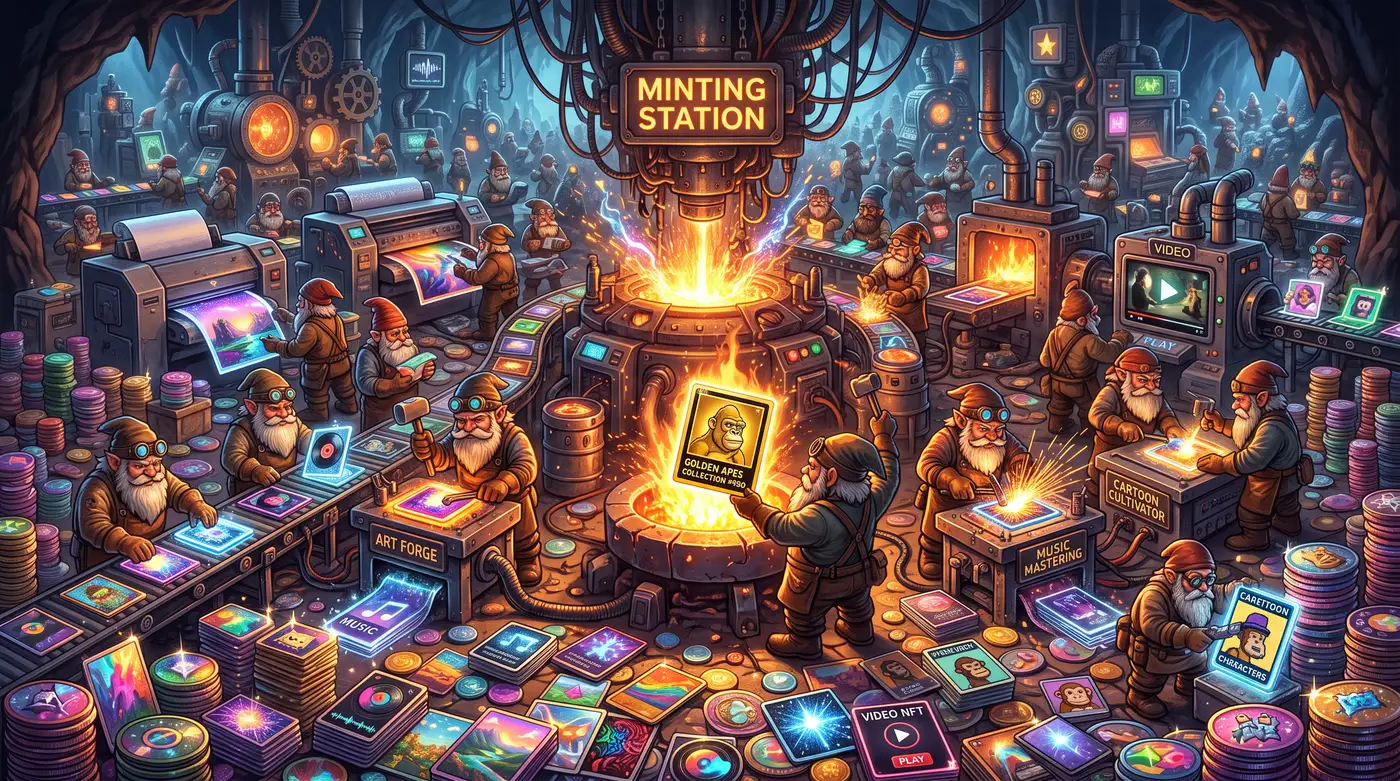
Content delivery is the single most untapped use of NFTs. An NFT is usually thought of as one image file and some code, but the image file is just the wrapper: the part you see publicly and share on social media. Holding the token in your wallet is how you gain access to the contents, which could be a high-resolution image, an ebook, a music file or a video.
The token carries its rules of transfer too, even permissionless incentivised replication, where a holder earns when their copy of the token is replicated. Every holder becomes a potential affiliate of what they hold, and the creator of the token is paid on each replication.
What else can be in there
ERC-721, the Ethereum standard for NFTs written in 2018, already looked far beyond pictures:
NFTs can represent ownership over digital or physical assets. We considered a diverse universe of assets, and we know you will dream up many more:
- Physical property — houses, unique artwork
- Virtual collectibles — unique pictures of kittens, collectible cards
- "Negative value" assets — loans, burdens and other responsibilities
In general, all houses are distinct and no two kittens are alike.
Tickets
GET Protocol has issued tickets on a blockchain since 2016, more than 4 million of them by 2023. In 2022 Coachella sold ten lifetime festival passes as NFTs, and Ticketmaster gave every fan at Super Bowl LVI an NFT of their ticket as a souvenir. In my opinion tickets are still a very good use. A fake is caught at the door, because the door checks it against the blockchain. The resale price can be capped, and the artist or venue can take a cut of every resale. A ticket can be refundable but non-transferable, so there is no scalping, and after the show it stays in the wallet as a souvenir.
Coupons, loyalty cards and memberships
A coupon as an NFT can be traded, and the retailer can earn a small percentage on transfers. It can be programmed to expire, or made non-transferable so only the direct customer can use it. A membership can expire, stay with the member, or be sold on when the member leaves, with the club earning a small percentage. The rules on how an NFT can be used, and by whom, are programmed into the NFT itself.
Claims on real goods
The WAX blockchain set out to build vIRLs, short for "virtual in real life", and a sales system for a "Post-Retail World", where shoes, wine or gifts were bought as NFTs and held in storage until the holder asked for delivery. The NFT could be sent as a gift anywhere in the world or traded, and nothing shipped until its holder paid for delivery. Funko, Hot Wheels and Bratz all sold vIRL NFTs; Bratz holders could claim the physical toy. Nike patented "CryptoKicks" in 2019, digital sneakers each linked to a real pair, bought the NFT studio RTFKT in 2021, and closed RTFKT down in January 2025.
Game items
Tools, potions, treasures, upgrades and clothes for a character can be earned or bought as NFTs and passed between players or sold. Using them across many games rarely happened, because each game has to support the others' items. WAX was founded largely on this idea in 2017, by the team behind OPSkins, then the leading marketplace for items from games such as Counter-Strike and Dota 2.
Why wallets filled with pictures
Ethereum was the first blockchain where minting and reselling NFTs really took off. There were earlier experiments on Bitcoin, such as Colored Coins and Rare Pepes, but in 2017 CryptoKitties became so popular it jammed the Ethereum network. CryptoPunks arrived in 2017 and the Bored Ape Yacht Club in 2021, and marketplaces sprang up to trade them: OpenSea in 2017, Rarible in 2020 and Blur in 2022. Simple pictures traded at incredible valuations based on mint number, scarcity and the rarity of their traits; in 2022 a CryptoPunk sold for about $23.7 million, as one of only nine rare "aliens" among the 10,000. The critics' favourite jab was "just right-click and save it": anyone could copy the picture, so what was the buyer paying for?
Rules that stay with the token
Most NFTs got the creator's fee wrong. On Ethereum it was only advertised by the token and left to the marketplaces to pay; once they made it optional, it mostly stopped being paid. WAX made the same mistake, leaving fees to the exchanges, when the token itself should enforce them. Ethereum (ERC-721C) and Solana (programmable NFTs) added forced fees in 2023, and Algorand has its own version (ARC-18), each by controlling who may move the token: an approved list of marketplaces, or a contract with an administrator.
The BRC-226 tokens we created on BSV work differently: anyone can buy a copy straight from the token itself, and the creator's fee on that sale is one of the token's own rules, enforced by the miners. The rules travel inside each token, into whichever wallet holds it, and can never be changed: no administrator, and no approved list of marketplaces. As far as we know, no other NFT works this way. NFT.sale is a marketplace that works on these tokens.
In closing
NFTs are probably the most important use of blockchain technology, and they go far beyond collectibles and speculation on digital scarcity. They will likely only become truly mainstream when they are as boring as a bus ticket or a bag of potato chips. That day is coming: when a wallet quietly holds your tickets, coupons and music, everyone will own an NFT without even thinking about it.